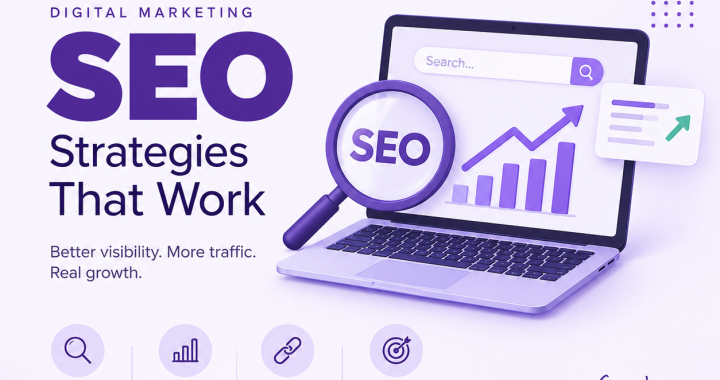
🔍 SEO Secrets

1. SEO Explained: A Beginner’s Guide to Ranking on Google

Article Brief:
This article will introduce beginners to Search Engine Optimization and explain why it matters for businesses.
It will explain how search engines crawl, understand, and rank web pages.
The article will cover keywords, content, technical SEO, backlinks, and user experience.
It will also explain why SEO is a long-term strategy rather than an instant marketing solution.
Readers will finish with a clear understanding of how websites can improve their organic visibility.

2. On-Page vs. Off-Page SEO: What’s the Difference?

Article Brief:
This article will clearly explain the difference between on-page and off-page SEO.
On-page topics will include keywords, headings, content, URLs, internal links, and meta information.
Off-page SEO will cover backlinks, brand mentions, authority, and external signals.
The article will explain why both areas are important for a successful SEO strategy.
Examples will help beginners understand how these two approaches work together.

3. How Keyword Research Can Improve Your Website Traffic

Article Brief:
This article will explain what keyword research is and why it is one of the foundations of SEO.
It will cover search volume, competition, long-tail keywords, and search intent.
Readers will learn how to identify keywords that are relevant to their products, services, and audience.
The article will also explain how keywords should be naturally incorporated into website content.
The goal is to help businesses attract more relevant and qualified organic traffic.

4. AI and SEO: How Artificial Intelligence Is Changing Search

Article Brief:
This article will explore the growing relationship between Artificial Intelligence and SEO.
It will discuss AI-powered search experiences, content creation, keyword research, and SEO analysis.
The article will also explain how changing search behaviour may affect traditional SEO strategies.
It will emphasize the importance of helpful, accurate, original, and user-focused content.
Readers will learn how businesses can adapt their SEO strategies to an increasingly AI-driven search environment.

5. 10 SEO Mistakes That Can Hurt Your Google Rankings

Article Brief:
This article will highlight ten common SEO mistakes that can negatively affect website performance.
Topics will include keyword stuffing, duplicate content, broken links, slow loading speeds, and poor mobile design.
It will also cover weak internal linking, missing metadata, and creating content without understanding search intent.
Each mistake will be explained along with a practical way to fix it.
The article will help businesses create a stronger and more search-friendly website.
🚀 Growth Lab

1. How to Build a Strong Digital Growth Strategy in 2026

Article Brief:
This article will explain how businesses can create an effective digital growth strategy in 2026.
It will cover SEO, social media, paid advertising, content marketing, email marketing, and analytics.
The article will explain how these channels can work together instead of being used separately.
It will also discuss identifying the target audience and setting measurable marketing goals.
Readers will learn how a well-planned digital strategy can increase visibility, leads, and revenue.

2. 10 Digital Marketing Strategies Every Small Business Should Try

Article Brief:
This article will introduce ten practical digital marketing strategies designed specifically for small businesses.
Topics will include local SEO, social media marketing, content creation, Google Ads, email marketing, and online reviews.
Each strategy will be explained with simple and practical examples.
The article will also discuss how businesses can choose strategies according to their budget and goals.
The focus will be on affordable methods that can help small businesses compete online.

3. From Clicks to Customers: How Digital Marketing Drives Business Growth

Article Brief:
This article will explain why website traffic alone does not guarantee business growth.
It will explore the complete customer journey, from discovering a brand to making a purchase.
The article will cover lead generation, landing pages, calls-to-action, retargeting, and conversion optimization.
It will also explain how businesses can understand customer behaviour using analytics.
Readers will learn how to turn online attention into meaningful business results.

4. How to Build an Online Presence for Your Business

Article Brief:
This article will explain the essential elements of creating a strong online presence.
It will cover professional websites, social media profiles, Google Business Profile, SEO, and online reviews.
The article will explain why consistency in branding and communication is important across platforms.
It will also discuss how businesses can establish credibility and build customer trust online.
Readers will receive a practical roadmap for developing their digital presence from scratch.

5. 7 Common Digital Marketing Mistakes Businesses Should Avoid

Article Brief:
This article will identify common mistakes that can prevent businesses from achieving digital marketing success.
It will discuss issues such as inconsistent content, poor targeting, weak branding, and ignoring SEO.
Other topics will include failing to track results and focusing too heavily on direct selling.
Each mistake will be accompanied by a practical solution or improvement strategy.
The goal is to help businesses avoid unnecessary costs and improve their marketing performance.

📱 Social Buzz

1. How to Build a Strong Social Media Presence for Your Brand

Article Brief:
This article will explain how businesses can create a recognizable and professional social media presence.
It will cover profile optimization, content pillars, posting consistency, visual identity, and audience engagement.
The article will explain why businesses should focus on the platforms where their target audience is active.
It will also discuss how valuable content can build trust instead of simply promoting products.
Readers will learn how to develop a sustainable social media strategy.

2. Instagram Marketing Strategies That Actually Work

Article Brief:
This article will explore practical Instagram marketing strategies for businesses and brands.
It will cover Reels, Stories, carousel posts, hashtags, collaborations, and audience engagement.
The article will explain how businesses can create content based on their audience’s interests and problems.
It will also discuss consistency, strong hooks, calls-to-action, and performance tracking.
Readers will learn how to use Instagram as a marketing and brand-building platform.

3. Reels vs. Posts: Which Content Format Is Better for Your Business?

Article Brief:
This article will compare Instagram Reels and traditional static posts from a marketing perspective.
It will discuss reach, engagement, educational content, storytelling, and product promotion.
The article will explain when businesses should use Reels and when static posts may be more effective.
It will also show why using a combination of content formats can create a balanced strategy.
Readers will learn how to select content formats based on their specific marketing objectives.

4. How to Create a Social Media Content Calendar

Article Brief:
This article will explain how businesses can organize their social media content using a content calendar.
It will cover content pillars, posting schedules, promotional campaigns, seasonal events, and important dates.
The article will explain how advance planning can reduce inconsistency and last-minute content creation.
It will also discuss balancing promotional, educational, entertaining, and engaging posts.
Readers will learn how to create a simple and effective monthly content plan.

5. Why Your Social Media Posts Aren’t Getting Engagement

Article Brief:
This article will explore the possible reasons behind low social media reach and engagement.
It will discuss weak opening hooks, irrelevant content, inconsistent posting, poor visuals, and limited interaction.
The article will explain why understanding the target audience is essential for creating engaging content.
It will also cover the importance of testing different formats and reviewing performance data.
Readers will learn practical ways to improve engagement without relying solely on viral trends

🛒 E-Commerce Edge

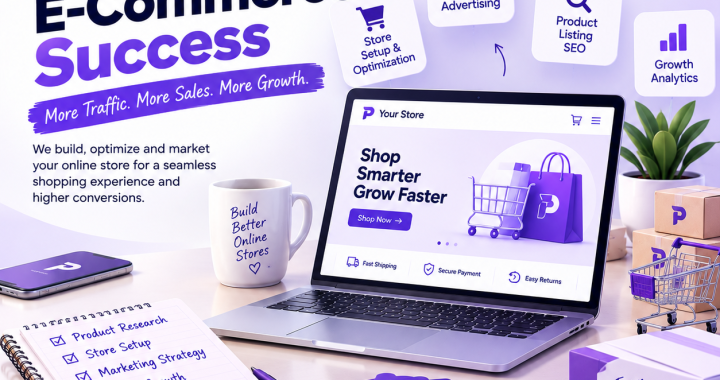
1. How to Start an E-Commerce Business in 2026

Article Brief:
This article will provide a beginner-friendly roadmap for starting an e-commerce business.
It will cover product selection, target audiences, market research, online store development, payments, and shipping.
The article will also explain the importance of product photography, descriptions, customer support, and trust signals.
Digital marketing strategies for attracting the first customers will also be discussed.
Readers will understand the major steps involved in launching an online store.

2. How Digital Marketing Can Increase E-Commerce Sales

Article Brief:
This article will explain how digital marketing can help e-commerce businesses attract and convert customers.
It will cover SEO, social media marketing, Google Shopping, paid advertising, email marketing, and retargeting.
The article will explain how different channels can support customers at different stages of the buying journey.
It will also discuss the importance of product pages and conversion-focused website design.
Readers will learn how an integrated marketing strategy can support online sales.

3. Why Customers Abandon Their Shopping Carts

Article Brief:
This article will explore the major reasons customers add products to their carts but do not complete purchases.
Common issues include unexpected costs, complicated checkout processes, slow websites, and lack of trust.
The article will also discuss payment options, return policies, shipping information, and mobile experiences.
Practical strategies for reducing cart abandonment will be presented.
The goal is to help online stores improve their checkout experience and recover potential sales.

4. E-Commerce SEO: How to Get More Organic Traffic to Your Online Store

Article Brief:
This article will explain how e-commerce businesses can use SEO to attract potential customers through search engines.
It will cover product keywords, category pages, product descriptions, URLs, internal linking, and technical SEO.
The article will explain why unique and useful product content is important for organic visibility.
It will also discuss optimizing websites for mobile users and search intent.
Readers will learn how SEO can create a long-term source of qualified e-commerce traffic.

5. The Role of AI in the Future of E-Commerce

Article Brief:
This article will explore how Artificial Intelligence is transforming online shopping experiences.
It will cover AI-powered product recommendations, chatbots, personalized marketing, customer support, and predictive analytics.
The article will explain how AI can help businesses understand customer behaviour and improve personalization.
It will also discuss the importance of using AI responsibly while maintaining customer trust.
Readers will gain insight into how AI may shape the next generation of e-commerce

✍️ Content Corner

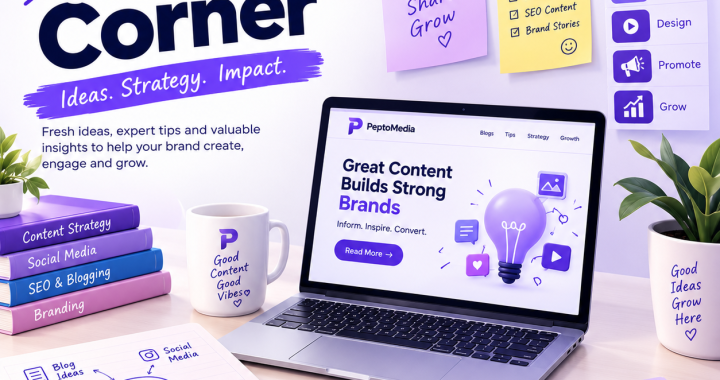
1. What Is Content Marketing and Why Does Your Business Need It?

Article Brief:
This article will explain the concept of content marketing and how it differs from traditional advertising.
It will cover blogs, videos, social media posts, guides, newsletters, and educational content.
The article will explain how valuable content can attract potential customers before they are ready to buy.
It will also discuss trust, authority, SEO benefits, and long-term audience relationships.
Readers will understand why content should be an important part of a modern marketing strategy.

2. How to Write a Blog That People Actually Want to Read

Article Brief:
This article will provide a practical framework for creating engaging and useful blog content.
It will cover choosing the right topic, writing strong headlines, creating introductions, organizing sections, and using clear language.
The article will also explain the importance of research, examples, visuals, and relevant calls-to-action.
SEO considerations such as keywords and search intent will also be introduced.
Readers will learn how to create blogs that are useful for both audiences and search engines.

3. Content Marketing vs. Traditional Advertising

Article Brief:
This article will compare content marketing with traditional advertising methods such as television, print, radio, and direct advertisements.
It will discuss differences in communication, targeting, customer relationships, cost, and long-term value.
The article will explain how content marketing focuses on providing value while building audience trust.
It will also discuss situations where traditional advertising can still be useful.
Readers will learn how businesses can combine different approaches rather than relying on only one method.

4. 10 Content Ideas Every Business Can Use

Article Brief:
This article will provide businesses with practical ideas for maintaining a consistent content strategy.
Ideas will include educational posts, FAQs, tutorials, customer stories, case studies, industry insights, and behind-the-scenes content.
The article will explain how these formats can be adapted for blogs, social media, videos, and email marketing.
It will also show how businesses can turn one idea into multiple pieces of content.
Readers will leave with a useful list of content ideas they can implement immediately.

5. How Storytelling Can Make Your Brand More Memorable

Article Brief:
This article will explain why storytelling can create stronger emotional connections between brands and customers.
It will cover brand origin stories, customer experiences, challenges, values, and behind-the-scenes narratives.
The article will explain how authentic stories can make businesses feel more relatable and memorable.
It will also discuss how storytelling can be used across websites, social media, advertisements, and blogs.
Readers will learn how to turn ordinary brand messages into more engaging stories.

💻 Web Works

1. Why Every Business Needs a Professional Website

Article Brief:
This article will explain why a website remains an important digital asset for modern businesses.
It will cover credibility, customer information, lead generation, SEO, online visibility, and 24/7 accessibility.
The article will explain why businesses should treat their website as more than an online brochure.
It will also discuss the importance of clear navigation, strong content, and conversion-focused design.
Readers will understand how a professional website can support broader business goals.

2. What Makes a Website User-Friendly?

Article Brief:
This article will explain the key elements of a user-friendly website.
It will cover simple navigation, readable content, responsive design, fast loading speeds, clear buttons, and logical page structure.
The article will discuss why understanding user behaviour is important when designing websites.
It will also explain how a poor user experience can cause visitors to leave without taking action.
Readers will learn the fundamentals of creating a better website experience.

3. Website Speed and SEO: Why Loading Time Matters

Article Brief:
This article will explore the relationship between website performance, user experience, and SEO.
It will explain how slow-loading pages can frustrate visitors and potentially affect website performance in search.
The article will introduce factors such as large images, unnecessary scripts, hosting, and inefficient website code.
It will also provide general approaches businesses can consider to improve loading speed.
Readers will understand why website performance should be part of both SEO and web development strategies.

4. Website Design Trends to Watch in 2026

Article Brief:
This article will explore modern website design trends that businesses should be aware of in 2026.
Topics will include minimalist layouts, interactive elements, animations, bold typography, mobile-first design, and personalized experiences.
The article will explain how businesses can use trends without sacrificing usability and accessibility.
It will also emphasize the importance of maintaining a strong brand identity.
Readers will learn how to create websites that feel modern while remaining practical.

5. Landing Page vs. Website: What Does Your Business Need?

Article Brief:
This article will explain the purpose and differences between landing pages and complete business websites.
It will discuss how landing pages are often designed for specific campaigns, products, or lead-generation objectives.
A website, on the other hand, provides broader information about a business and its offerings.
The article will explain when each option may be more appropriate.
Readers will be able to choose the right digital asset based on their marketing objectives.

🤖 AI & Technology

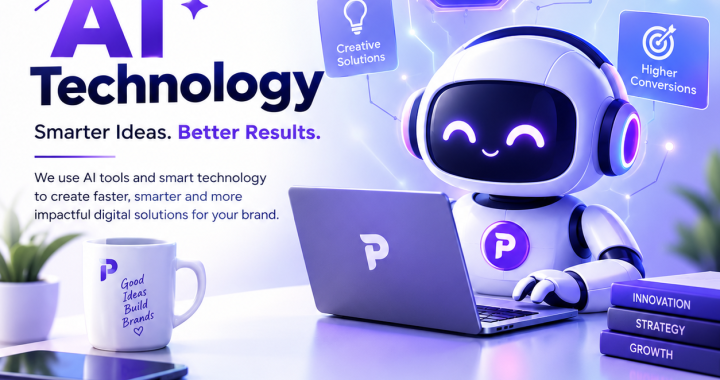
1. What Is Generative AI? A Complete Beginner’s Guide

Article Brief:
This article will introduce Generative AI and explain how it differs from traditional software and AI systems.
It will cover how AI models can generate text, images, videos, audio, and computer code.
The article will explain common applications of Generative AI in business, education, marketing, and creative work.
It will also discuss the importance of human review, accuracy, originality, and responsible AI usage.
Readers will gain a simple foundation for understanding one of the fastest-growing areas of technology.

2. 10 AI Tools Every Digital Marketer Should Know

Article Brief:
This article will explore ten useful categories of AI tools that can support digital marketing activities.
It will cover tools for content creation, graphic design, SEO, research, analytics, social media, video, and automation.
For each category, the article will explain how marketers can use AI to improve productivity.
It will also discuss why AI should support rather than completely replace human strategy and creativity.
Readers will gain ideas for integrating AI into their everyday marketing workflows.

3. Will AI Replace Digital Marketers?

Article Brief:
This article will examine one of the biggest questions surrounding AI and the marketing industry.
It will discuss tasks that AI can automate, such as content drafts, data analysis, research, and repetitive workflows.
The article will also explain why human skills such as creativity, strategy, empathy, communication, and decision-making remain valuable.
Rather than focusing only on replacement, it will explore the possibility of human-AI collaboration.
Readers will gain a balanced perspective on the future of digital marketing careers.

4. How AI Is Changing Digital Marketing

Article Brief:
This article will explore the growing role of AI across different areas of digital marketing.
It will cover content creation, personalization, customer support, SEO, advertising, analytics, and marketing automation.
The article will explain how AI can help businesses process information and perform certain tasks more efficiently.
It will also discuss challenges such as inaccurate outputs, privacy concerns, and the need for human oversight.
Readers will understand how AI is influencing modern marketing strategies.

5. AI Agents: The Next Big Step in Artificial Intelligence

Article Brief:
This article will explain what AI agents are and how they differ from basic AI chatbots and assistants.
It will explore their ability to handle multi-step tasks, use tools, process information, and work toward defined objectives.
The article will discuss potential applications in marketing, customer service, research, and business automation.
It will also highlight the importance of human oversight and responsible implementation.
Readers will gain an introduction to one of the emerging areas of AI technology.

📈 Trend Radar

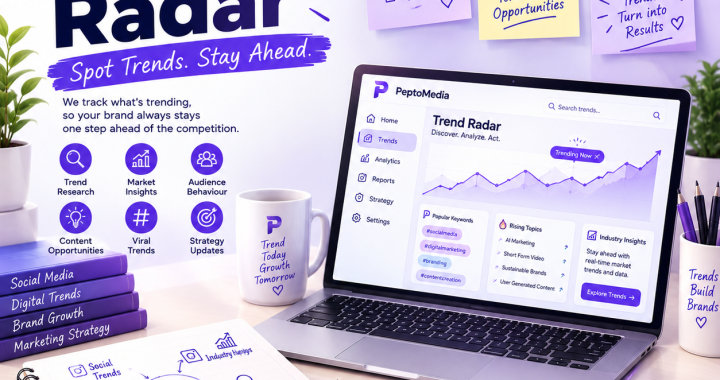
1. Top Digital Marketing Trends to Watch in 2026

Article Brief:
This article will explore the major digital marketing trends shaping the industry in 2026.
It will cover AI, personalization, short-form video, social commerce, automation, changing search behaviour, and data-driven marketing.
The article will explain why these trends matter for businesses and marketers.
It will also discuss how brands can adapt without blindly following every new trend.
Readers will gain practical insights into where digital marketing is heading.

2. Social Media Trends Every Business Should Know

Article Brief:
This article will examine important social media trends influencing how brands communicate with audiences.
It will cover short-form video, creator collaborations, community building, social commerce, interactive content, and authentic communication.
The article will explain how these trends can influence content strategies and audience engagement.
It will also discuss why businesses should focus on relevance rather than simply chasing viral content.
Readers will learn how to make social media strategies more adaptable and audience-focused.

3. The Rise of Social Commerce: Are Social Media Platforms Becoming Online Stores?

Article Brief:
This article will explore the growing connection between social media and online shopping.
It will discuss product discovery through social content, creators, advertisements, recommendations, and shopping features.
The article will explain how social platforms can shorten the journey between discovering a product and purchasing it.
It will also discuss the importance of trust, reviews, authentic content, and customer experience.
Readers will understand why social commerce is becoming increasingly relevant to e-commerce brands.

4. How AI Is Changing the Way People Search Online

Article Brief:
This article will explore how AI-powered search experiences are changing the way users discover information online.
It will compare traditional keyword-based searches with more conversational and AI-assisted search experiences.
The article will discuss what these changes could mean for SEO, content creation, and website visibility.
It will emphasize the importance of creating useful, trustworthy, and well-structured content.
Readers will understand why businesses need to keep adapting their search strategies.

5. The Future of Digital Marketing: What Businesses Should Prepare For

Article Brief:
This article will look at the long-term changes expected to influence digital marketing.
It will cover AI, automation, personalization, privacy, changing consumer expectations, social commerce, and evolving search behaviour.
The article will explain why businesses need flexible strategies instead of relying on outdated marketing methods.
It will also highlight the importance of data, creativity, customer experience, and continuous learning.
Readers will gain a forward-looking view of how businesses can prepare for the next stage of digital marketing.

🎯 Ad Arena

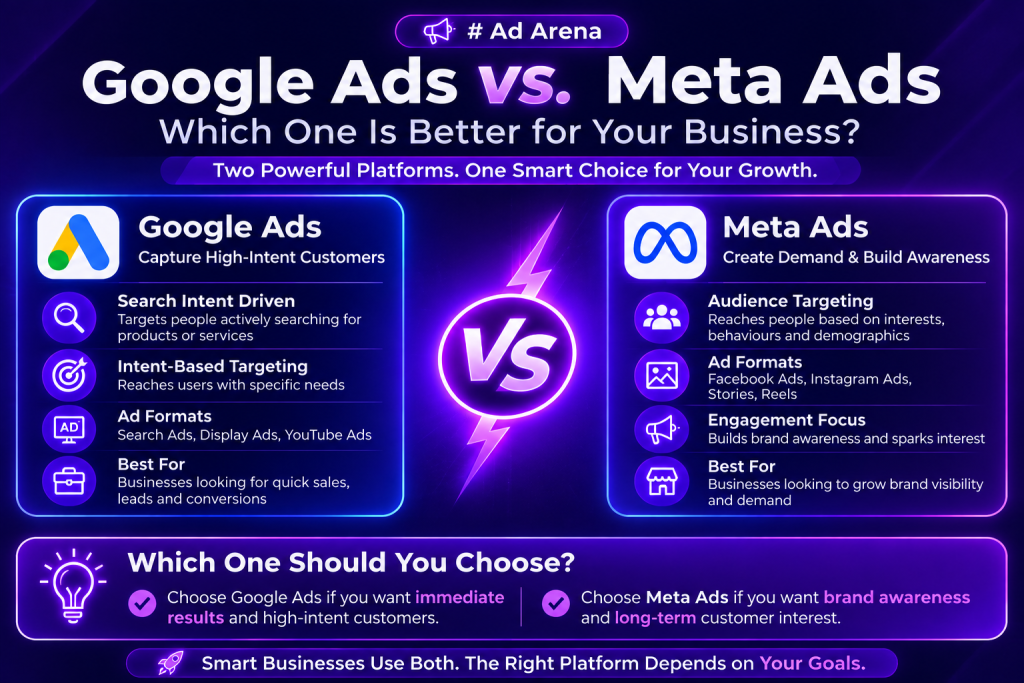
1. Google Ads vs. Meta Ads: Which One Is Better for Your Business?

Article Brief:
This article will compare Google Ads and Meta Ads and explain how their advertising models differ.
It will cover search intent, audience targeting, ad formats, campaign objectives, and customer journeys.
Google Ads can capture people actively searching for products or services, while Meta can help create demand through targeted discovery.
The article will explain which platform may suit different types of businesses and goals.
Readers will learn how to choose a platform based on their audience, budget, and objectives.

2. A Beginner’s Guide to Google Ads

Article Brief:
This article will introduce beginners to the fundamentals of Google Ads.
It will explain campaign objectives, keywords, ad groups, ad copy, bidding, budgets, and targeting.
The article will also introduce landing pages and conversion tracking as important parts of a campaign.
Common beginner mistakes and ways to avoid wasting advertising budgets will be discussed.
Readers will gain a basic understanding of how a Google Ads campaign is structured.

3. How Meta Ads Help Businesses Reach the Right Audience

Article Brief:
This article will explain how businesses can use Facebook and Instagram advertising to reach specific audiences.
It will cover demographic targeting, interests, behaviours, custom audiences, lookalike audiences, and retargeting.
The article will also discuss the importance of creative visuals and compelling ad copy.
It will explain how businesses can align audience targeting with different stages of the customer journey.
Readers will learn how targeted advertising can improve the relevance and efficiency of campaigns.

4. 7 Common Mistakes Businesses Make With Paid Ads

Article Brief:
This article will highlight seven mistakes that can cause businesses to waste their advertising budgets.
It will cover poor targeting, unclear campaign objectives, weak creatives, irrelevant landing pages, and insufficient testing.
The article will also explain why tracking conversions is more valuable than focusing only on clicks.
Each mistake will include a practical recommendation for improving campaign performance.
The goal is to help businesses approach paid advertising more strategically.

5. How to Measure the Success of a Digital Advertising Campaign

Article Brief:
This article will explain the key metrics businesses should monitor when evaluating paid advertising campaigns.
It will cover CTR, CPC, CPM, conversions, CPA, conversion rate, and ROAS.
The article will explain what each metric means and when it becomes useful for decision-making.
It will also discuss why campaign success should be measured against business objectives rather than vanity metrics.
Readers will learn how to use performance data to optimize future campaigns.

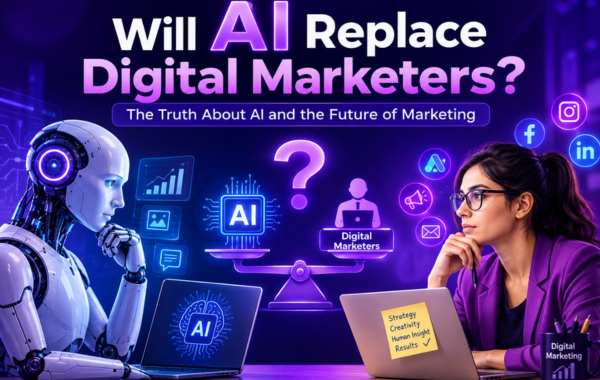
Will AI Replace Digital Marketers?

Artificial Intelligence is transforming digital marketing by automating tasks such as content creation, SEO analysis, paid-media optimization, research, and performance reporting. However, current research suggests that marketing jobs are changing rather than simply disappearing. The 2026 American Marketing Association research identifies execution-heavy areas such as SEO, paid media, copywriting, and performance analytics as highly exposed to AI, while strategy, creativity, leadership, critical thinking, collaboration, and emotional intelligence remain more human-led. The article will explore what AI can automate, what still requires human expertise, and why marketers who learn to work effectively with AI may have an advantage. The central argument will be that the future is likely to be AI-assisted marketing, not simply AI-replaced marketing

1. Introduction — The AI Question
Start with the question that many marketers are asking: “Will AI take my marketing job?” Explain how rapidly tools such as generative AI have entered everyday marketing workflows.


2. What Can AI Already Do?
Cover tasks such as:

  • Content drafts and copywriting
  • Keyword and SEO research
  • Ad optimization
  • Data analysis
  • Market research
  • Email personalization
  • Lead generation
  • Basic graphic and creative production

3. What AI Still Struggles With
Explain the importance of:

  • Strategic thinking
  • Creativity and original ideas
  • Understanding emotions
  • Brand positioning
  • Leadership
  • Client communication
  • Ethical decision-making
  • Understanding cultural and business context

4. AI vs. Digital Marketer — The Real Difference

Instead of presenting it as AI vs. humans, explain it as AI + humans.

For example:

AI can analyze thousands of data points, but a marketer decides what the data actually means for the brand.

AI can generate ten ad copies, but a marketer decides which message fits the audience and brand.

This makes the article more balanced and professional.

5. The Digital Marketer of the Future

Explain that marketers will increasingly need AI fluency alongside traditional marketing skills. The AMA’s 2026 research identifies AI as a major future skill while also emphasizing adaptability, strategic thinking, judgment, quality control, storytelling, business understanding, and original thinking.

6. How Marketers Can Stay Relevant

Give readers actionable advice:

  • Learn AI tools instead of avoiding them.
  • Understand SEO, analytics, and digital strategy.
  • Develop strong communication and storytelling skills.
  • Learn how to evaluate AI-generated information.
  • Build strategic thinking and creative skills.
  • Use AI to automate repetitive work.
  • Focus more time on ideas, strategy, and customers.

The World Economic Forum’s research also points toward increasing demand for AI and technology skills alongside creative thinking, analytical thinking, resilience, and adaptability

The conclusion should not simply say “AI will not replace marketers.” A stronger conclusion would be:

AI may replace some marketing tasks, but the bigger transformation is that it will change what being a digital marketer means. Marketers who rely only on manual execution may face greater disruption, while those who combine AI fluency with strategy, creativity, communication, and human judgment can become more valuable. The future of digital marketing is therefore less about choosing between AI and humans—and more about learning how to make both work better together.