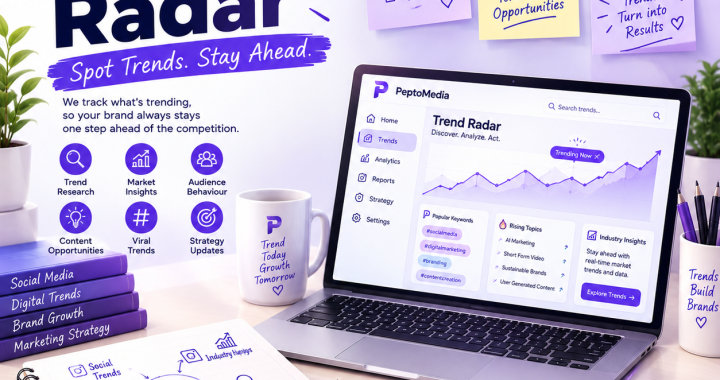
📈 Trend Radar

1. Top Digital Marketing Trends to Watch in 2026

Article Brief:
This article will explore the major digital marketing trends shaping the industry in 2026.
It will cover AI, personalization, short-form video, social commerce, automation, changing search behaviour, and data-driven marketing.
The article will explain why these trends matter for businesses and marketers.
It will also discuss how brands can adapt without blindly following every new trend.
Readers will gain practical insights into where digital marketing is heading.

2. Social Media Trends Every Business Should Know

Article Brief:
This article will examine important social media trends influencing how brands communicate with audiences.
It will cover short-form video, creator collaborations, community building, social commerce, interactive content, and authentic communication.
The article will explain how these trends can influence content strategies and audience engagement.
It will also discuss why businesses should focus on relevance rather than simply chasing viral content.
Readers will learn how to make social media strategies more adaptable and audience-focused.

3. The Rise of Social Commerce: Are Social Media Platforms Becoming Online Stores?

Article Brief:
This article will explore the growing connection between social media and online shopping.
It will discuss product discovery through social content, creators, advertisements, recommendations, and shopping features.
The article will explain how social platforms can shorten the journey between discovering a product and purchasing it.
It will also discuss the importance of trust, reviews, authentic content, and customer experience.
Readers will understand why social commerce is becoming increasingly relevant to e-commerce brands.

4. How AI Is Changing the Way People Search Online

Article Brief:
This article will explore how AI-powered search experiences are changing the way users discover information online.
It will compare traditional keyword-based searches with more conversational and AI-assisted search experiences.
The article will discuss what these changes could mean for SEO, content creation, and website visibility.
It will emphasize the importance of creating useful, trustworthy, and well-structured content.
Readers will understand why businesses need to keep adapting their search strategies.

5. The Future of Digital Marketing: What Businesses Should Prepare For

Article Brief:
This article will look at the long-term changes expected to influence digital marketing.
It will cover AI, automation, personalization, privacy, changing consumer expectations, social commerce, and evolving search behaviour.
The article will explain why businesses need flexible strategies instead of relying on outdated marketing methods.
It will also highlight the importance of data, creativity, customer experience, and continuous learning.
Readers will gain a forward-looking view of how businesses can prepare for the next stage of digital marketing.

🎯 Ad Arena

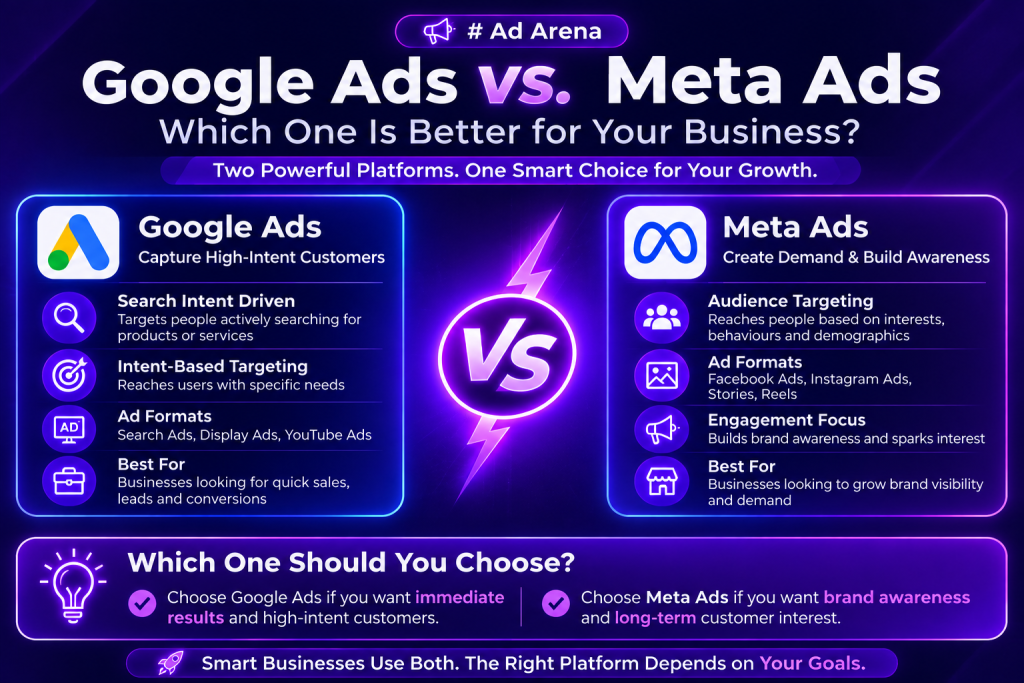
1. Google Ads vs. Meta Ads: Which One Is Better for Your Business?

Article Brief:
This article will compare Google Ads and Meta Ads and explain how their advertising models differ.
It will cover search intent, audience targeting, ad formats, campaign objectives, and customer journeys.
Google Ads can capture people actively searching for products or services, while Meta can help create demand through targeted discovery.
The article will explain which platform may suit different types of businesses and goals.
Readers will learn how to choose a platform based on their audience, budget, and objectives.

2. A Beginner’s Guide to Google Ads

Article Brief:
This article will introduce beginners to the fundamentals of Google Ads.
It will explain campaign objectives, keywords, ad groups, ad copy, bidding, budgets, and targeting.
The article will also introduce landing pages and conversion tracking as important parts of a campaign.
Common beginner mistakes and ways to avoid wasting advertising budgets will be discussed.
Readers will gain a basic understanding of how a Google Ads campaign is structured.

3. How Meta Ads Help Businesses Reach the Right Audience

Article Brief:
This article will explain how businesses can use Facebook and Instagram advertising to reach specific audiences.
It will cover demographic targeting, interests, behaviours, custom audiences, lookalike audiences, and retargeting.
The article will also discuss the importance of creative visuals and compelling ad copy.
It will explain how businesses can align audience targeting with different stages of the customer journey.
Readers will learn how targeted advertising can improve the relevance and efficiency of campaigns.

4. 7 Common Mistakes Businesses Make With Paid Ads

Article Brief:
This article will highlight seven mistakes that can cause businesses to waste their advertising budgets.
It will cover poor targeting, unclear campaign objectives, weak creatives, irrelevant landing pages, and insufficient testing.
The article will also explain why tracking conversions is more valuable than focusing only on clicks.
Each mistake will include a practical recommendation for improving campaign performance.
The goal is to help businesses approach paid advertising more strategically.

5. How to Measure the Success of a Digital Advertising Campaign

Article Brief:
This article will explain the key metrics businesses should monitor when evaluating paid advertising campaigns.
It will cover CTR, CPC, CPM, conversions, CPA, conversion rate, and ROAS.
The article will explain what each metric means and when it becomes useful for decision-making.
It will also discuss why campaign success should be measured against business objectives rather than vanity metrics.
Readers will learn how to use performance data to optimize future campaigns.

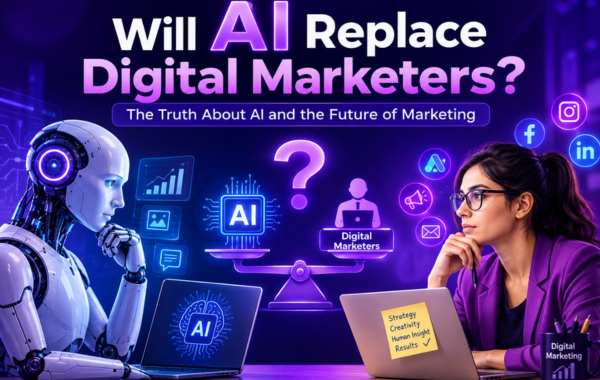
Will AI Replace Digital Marketers?

Artificial Intelligence is transforming digital marketing by automating tasks such as content creation, SEO analysis, paid-media optimization, research, and performance reporting. However, current research suggests that marketing jobs are changing rather than simply disappearing. The 2026 American Marketing Association research identifies execution-heavy areas such as SEO, paid media, copywriting, and performance analytics as highly exposed to AI, while strategy, creativity, leadership, critical thinking, collaboration, and emotional intelligence remain more human-led. The article will explore what AI can automate, what still requires human expertise, and why marketers who learn to work effectively with AI may have an advantage. The central argument will be that the future is likely to be AI-assisted marketing, not simply AI-replaced marketing

1. Introduction — The AI Question
Start with the question that many marketers are asking: “Will AI take my marketing job?” Explain how rapidly tools such as generative AI have entered everyday marketing workflows.


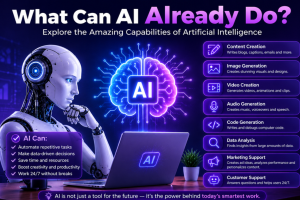
2. What Can AI Already Do?
Cover tasks such as:

  • Content drafts and copywriting
  • Keyword and SEO research
  • Ad optimization
  • Data analysis
  • Market research
  • Email personalization
  • Lead generation
  • Basic graphic and creative production

3. What AI Still Struggles With
Explain the importance of:

  • Strategic thinking
  • Creativity and original ideas
  • Understanding emotions
  • Brand positioning
  • Leadership
  • Client communication
  • Ethical decision-making
  • Understanding cultural and business context

4. AI vs. Digital Marketer — The Real Difference

Instead of presenting it as AI vs. humans, explain it as AI + humans.

For example:

AI can analyze thousands of data points, but a marketer decides what the data actually means for the brand.

AI can generate ten ad copies, but a marketer decides which message fits the audience and brand.

This makes the article more balanced and professional.

5. The Digital Marketer of the Future

Explain that marketers will increasingly need AI fluency alongside traditional marketing skills. The AMA’s 2026 research identifies AI as a major future skill while also emphasizing adaptability, strategic thinking, judgment, quality control, storytelling, business understanding, and original thinking.

6. How Marketers Can Stay Relevant

Give readers actionable advice:

  • Learn AI tools instead of avoiding them.
  • Understand SEO, analytics, and digital strategy.
  • Develop strong communication and storytelling skills.
  • Learn how to evaluate AI-generated information.
  • Build strategic thinking and creative skills.
  • Use AI to automate repetitive work.
  • Focus more time on ideas, strategy, and customers.

The World Economic Forum’s research also points toward increasing demand for AI and technology skills alongside creative thinking, analytical thinking, resilience, and adaptability

The conclusion should not simply say “AI will not replace marketers.” A stronger conclusion would be:

AI may replace some marketing tasks, but the bigger transformation is that it will change what being a digital marketer means. Marketers who rely only on manual execution may face greater disruption, while those who combine AI fluency with strategy, creativity, communication, and human judgment can become more valuable. The future of digital marketing is therefore less about choosing between AI and humans—and more about learning how to make both work better together.